Flower Silhouette Sublimation Clipart Review
As someone who has spent years stitching, designing, and reviewing digital assets for real-world production, I approach every new download with a mix of excitement and skepticism. Today, I am putting Flower Silhouette Sublimation Clipart to the test. While the product listing categorizes this under Freebies and Graphics, my focus is strictly on its viability as a machine embroidery design. Can this clean, minimalist shape translate from a screen to a fabric surface without losing its soul? Let's walk through how this design performs when it moves from a vector file to a finished embroidered piece.
The First Stitch: Visual Personality and Mood
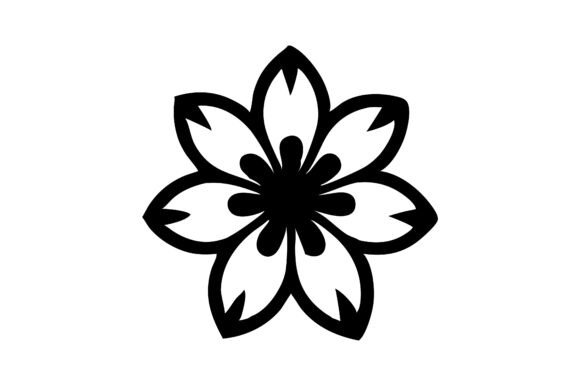
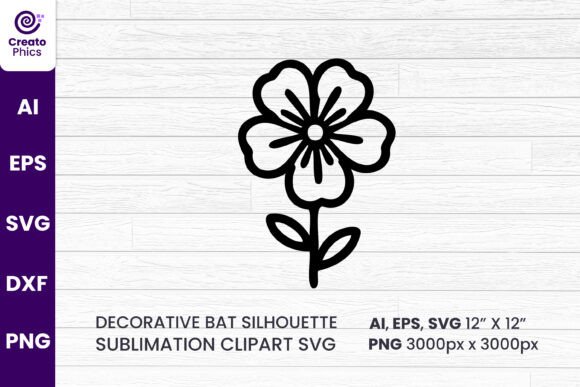
The moment you open the file, the Flower Silhouette Sublimation Clipart strikes me as understated yet confident. It avoids the clutter of overly detailed petals or intricate centers that often get lost in high-density satin stitches. Instead, it relies on a bold, solid form that promises clarity. This isn't a design meant to be whispered; it is designed to speak clearly even from across a room.
In the world of handmade goods, mood matters just as much as technique. This silhouette evokes a sense of modern elegance and organic simplicity. It feels at home in a boutique nursery, a chic coffee shop uniform, or a sophisticated wedding gift. The lack of internal detail means the design will hold up well against various thread textures, but it demands attention to placement and color contrast to truly shine. It is the kind of graphic that suggests the creator cares about quality over quantity.
A Real-World Scenario: The Custom Tote Bag Project
To truly understand the potential of this asset, imagine a scenario where you are preparing for a local craft fair. You have a batch of plain canvas tote bags ready for your small shop, and you want to add a touch of branding that appeals to both hobbyists and professional buyers. You decide to use the Flower Silhouette Sublimation Clipart as the centerpiece of your custom apparel line.
Here is where the practical judgment comes into play. When you stitch this onto a heavy-duty cotton canvas, the silhouette creates a striking focal point. Because the design is a single, cohesive shape, it minimizes the risk of thread breaks that often plague complex floral designs with tiny gaps. However, you must consider the texture of the bag. If the canvas weave is too coarse, the edges of the silhouette might look slightly jagged unless you adjust your stitch density. For a baby item or a delicate apron, this same design would offer a softer, more refined look, provided you choose a finer thread weight.
Customers buying these bags won't just see a flower; they will see a brand identity. A clean silhouette like this projects professionalism. It suggests that the seller understands design principles and isn't just slapping a generic image on a product. This level of visual polish can significantly increase the perceived value of your handmade products, allowing you to command a higher price point than competitors using pixelated or overly busy graphics.
Performance Across Different Fabrics and Products
The versatility of an embroidery file like this depends heavily on the substrate. The Flower Silhouette Sublimation Clipart is particularly effective on structured garments like sweatshirts and caps. On a crewneck sweatshirt, the solid fill of the silhouette provides excellent coverage, hiding the fabric underneath and creating a smooth, tactile finish. The design works beautifully as an embroidered patch, adding a decorative accent to denim jackets or backpacks.
For kitchen textiles like tea towels or pillow covers, the design offers a timeless aesthetic. Unlike trendy patterns that fade quickly, a simple flower silhouette remains relevant season after season. It fits perfectly into holiday embroidery collections, perhaps paired with subtle script lettering for a "Happy Harvest" or "Spring Welcome" message. In these contexts, the design acts as a reliable anchor, drawing the eye without overwhelming the surrounding elements.
However, not every project is a perfect fit. When considering commercial embroidery for items that require frequent washing, such as work uniforms or children's clothing, you need to evaluate the stability of the design. Solid shapes generally hold up better than fine lines, but the longevity still depends on proper stabilization techniques. If you are working with stretchy fabrics, the tension of the satin stitches might cause the fabric to pucker around the edges of the flower, so testing is essential.
Where Caution Is Required
Even the most promising design assets have their limitations. There are specific scenarios where the Flower Silhouette Sublimation Clipart requires careful handling. Small hoop sizes present a challenge; if the design is scaled down too much, the outer edges may lose definition, turning a crisp shape into a blob of thread. Similarly, on textured fabrics like bouclé or thick fleece, the details of the silhouette can get buried in the pile of the material.
Dark fabrics demand extra consideration regarding thread colors. A black silhouette on a navy shirt will vanish, while white thread on a dark background might show puckering if the stitch density is too high. Curved surfaces, such as baseball caps, can distort the symmetry of the flower if the digitization does not account for the curve of the hat. In these cases, the design might need slight adjustments to maintain its intended shape.
Furthermore, dense stitch areas can become stiff and uncomfortable if not balanced correctly. For wearable items like baby clothes, comfort is paramount. If the design uses too many fill stitches, it could create a hard spot that irritates sensitive skin. Always inspect small details and ensure the stitch count is appropriate for the garment type before running a full production run.
Designer Notes for Success
Before you commit this design to a final product, there are several technical steps every designer should take. First and foremost, always test the design on scrap fabric first. This allows you to observe how the thread interacts with the specific material you intend to use. Check thread color contrast carefully; a silhouette relies entirely on the boundary between the thread and the fabric, so poor contrast kills the impact.
Review your stitch density settings. If the design is too dense, it will be difficult to press flat; if it is too loose, it may look unfinished. Confirm the hoop size matches your project dimensions to avoid distortion. Inspect small details under good lighting to ensure no gaps exist that could snag during wear. Test the design in black and white mockups to verify its structural integrity independent of color.
Comparing light and dark fabric backgrounds is crucial for understanding the versatility of the asset. Use proper stabilizer to prevent shifting, especially on unstable materials. Finally, confirm whether the design works for both personal and commercial projects. Since this falls under the category of freebies and graphics, licensing terms vary wildly. Ensure you have the right permissions before selling finished items or using the design in digital product previews for your Etsy listings.
Final Thoughts on Practical Value
The Flower Silhouette Sublimation Clipart proves itself as a strong candidate for designers looking to streamline their workflow without sacrificing aesthetics. Its minimalist nature makes it adaptable to a wide range of applications, from personalized gifts to boutique branding. By understanding its strengths and respecting its limitations, you can transform a simple digital file into a high-quality finished product that customers will love.
Whether you are an Etsy seller looking to expand your catalog or a creative entrepreneur building a brand identity, this design offers a solid foundation. It reminds us that sometimes the most powerful design is the one that knows exactly what it needs to say—and says it clearly. With the right execution, this silhouette can elevate your craft business, proving that practical insight leads to better results than hype alone.