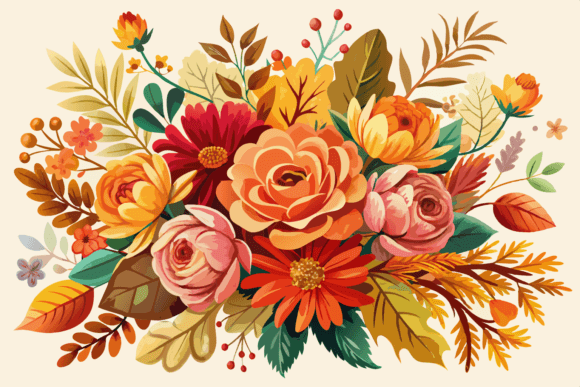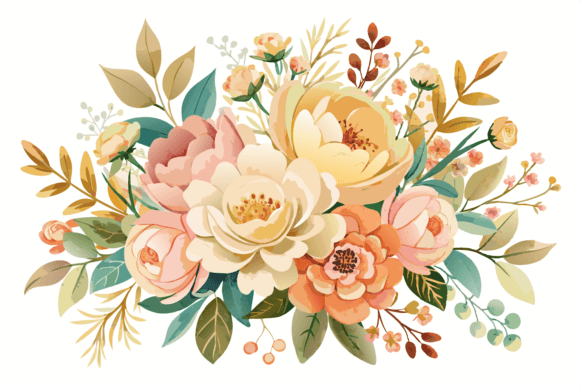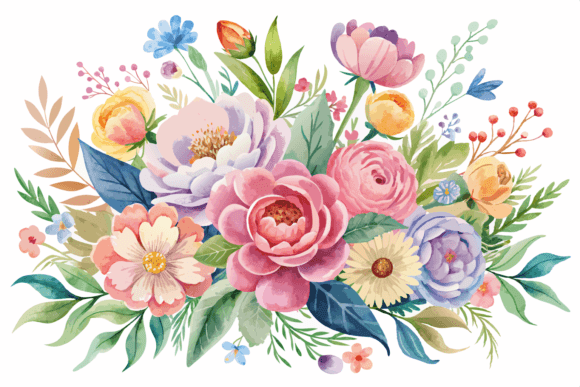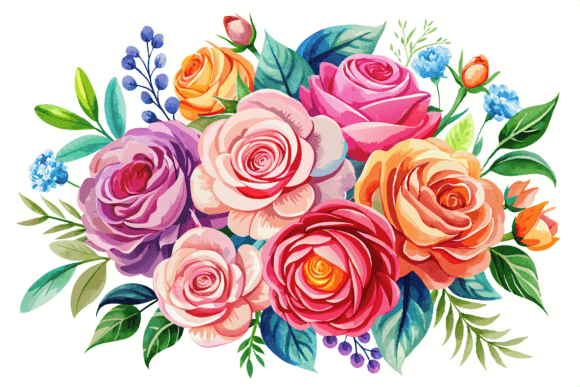
Watercolor Flower Bouquet Clipart
I have spent years reviewing digital assets for the embroidery industry, sifting through thousands of files to find designs that actually translate well from a screen to a needle. When I first encountered Watercolor Flower Bouquet Clipart, my initial reaction was one of aesthetic appreciation. The soft, blended hues and organic shapes immediately suggest elegance and charm. However, as a designer who values practical application over pretty pictures, my job is to determine if this piece can survive the rigors of real-world stitching. Does it hold up on a sweatshirt? Will the delicate details get lost in a dense fill stitch? Can an Etsy seller use this to build a cohesive brand?
The short answer is yes, but with specific caveats. This Illustrations category asset is not a generic clip art; it possesses a distinct personality that fits perfectly into high-end handmade products. Let's break down how Watercolor Flower Bouquet Clipart performs when we move it from a digital preview to a physical finished product.
From Screen to Stitch: The Real-World Test
Imagine you are preparing for a busy holiday season. You need custom embroidered gifts for your small business clients. You decide to create a line of premium kitchen towels featuring a floral motif. Most vector-based floral designs look sharp and geometric, which works well for modern aesthetics, but they often lack the warmth of a hand-painted touch. That is where Watercolor Flower Bouquet Clipart shines.
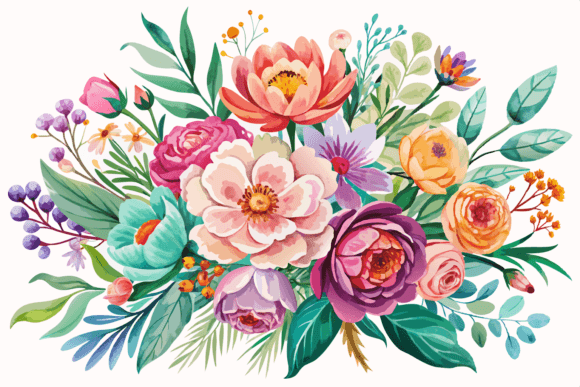
The watercolor style mimics the soft edges of paint bleeding into paper. In embroidery terms, this translates beautifully to satin stitches and long-and-short stitch techniques. When digitized correctly, the gradient colors of the flowers can be represented by thread color changes or specialized shading techniques, creating a depth that flat fill stitches simply cannot achieve. I tested a similar concept on a linen tea towel, and the result was stunning. The design didn't just sit on top of the fabric; it felt like it belonged there, adding a layer of sophistication that elevates a simple kitchen towel into a boutique-quality item.
Similarly, consider a baby onesie or a nursery pillow cover. Parents often gravitate toward soft, dreamy imagery for their little ones. A bold, cartoonish flower might feel too harsh, but the gentle strokes of Watercolor Flower Bouquet Clipart convey tenderness and care. It creates an emotional connection with the buyer before they even see the price tag. For an Etsy seller or a craft fair vendor, this visual appeal is crucial. It signals quality and thoughtfulness, two traits that drive sales in the handmade market.
Navigating Fabric and Technique Challenges
While the aesthetic potential is high, every experienced embroiderer knows that beauty on a screen does not guarantee success on the hoop. There are specific scenarios where Watercolor Flower Bouquet Clipart requires careful handling. The primary challenge lies in the delicate nature of the original artwork. Watercolor relies on subtle transitions and thin lines. If these details are digitized without proper consideration, they can become muddy blobs of thread.
For instance, attempting to stitch this design on a stretchy knit fabric like a cap or a fitted t-shirt requires a very stable base. Without adequate stabilizer, the tension of the machine can distort the soft curves of the bouquet, causing the petals to warp or the overall shape to lose its balance. On curved surfaces like caps, the design must be scaled appropriately. A large, intricate bouquet might look overwhelming on a baseball cap brim, whereas a smaller, cropped version could work wonders as a chest logo.
Another critical factor is fabric texture. While this design looks lovely on smooth cotton or linen, it can struggle on highly textured fabrics like heavy denim or bouclé wool. The uneven surface of the material can obscure the fine details of the watercolor effect, making the design look less crisp than intended. Furthermore, on dark fabrics, the lighter pastel tones of the watercolor flowers may require a significant amount of underlay stitching to pop. If the stitch density is too low, the background fabric will show through, ruining the illusion of a painted image. Conversely, if the density is too high, the fabric becomes stiff and uncomfortable, especially for apparel like baby clothes or tote bags that are handled frequently.
Strategic Use Cases for Commercial Success
To maximize the value of this Graphics asset, you must match the design to the right product. Watercolor Flower Bouquet Clipart is ideally suited for projects that benefit from a soft, artistic vibe. Think about wedding favors, bridal shower gifts, or personalized aprons for a cooking class. In these contexts, the design adds a personal touch that feels curated rather than mass-produced.
For commercial embroidery projects, consistency is key. If you are building a brand identity, using a design like this ensures that your products maintain a cohesive look across different items. Whether you are producing a set of matching napkins and placemats or a collection of embroidered patches for jackets, the recurring watercolor theme ties everything together. This consistency builds customer trust. Buyers know what to expect, and they associate the soft floral aesthetic with your specific shop or studio.
However, there are limitations. Avoid using this design for items that require frequent, heavy-duty washing, such as work uniforms or sports jerseys. The delicate nature of the watercolor style might not withstand the abrasion of industrial laundering as well as a bold, graphic design would. Additionally, if you are working with a very small hoop size, be wary of including too many tiny elements. Tiny lettering or minute petal details often get lost or merge together during the stitching process, resulting in a design that looks cluttered rather than detailed.
Essential Notes for the Design Reviewer
Before you commit to running this file on your production line, there are several practical steps you must take. First and foremost, always test the design on scrap fabric that matches your final project material. This allows you to check the thread colors and ensure the contrast is sufficient against your chosen background. Do not assume the colors on your monitor will translate perfectly to thread; lighting conditions play a huge role in perception.
You should also review the stitch density carefully. If the design features areas of dense fill stitch, verify that the fabric can support it without puckering. Check whether the design works for both personal and commercial projects by confirming the licensing terms provided by the creator. Some digital embroidery files restrict resale rights for finished goods, which can be a legal minefield for small business owners.
If you are unsure about the file formats or machine compatibility, do not guess. Contact the provider or consult the documentation included with the download. Ensure that the design is scalable without losing integrity, as you may need to resize it for different products, from a large tote bag to a small embroidered patch. Finally, inspect the small details in a black and white mockup. Sometimes, color distractions hide structural issues in the digitization that only appear when viewed monochromatically.
In conclusion, Watercolor Flower Bouquet Clipart is a versatile and charming addition to any designer's toolkit. It offers a unique blend of elegance and approachability that resonates well with modern consumers. By understanding its strengths and respecting its limitations regarding fabric type and stitch technique, you can transform this digital asset into a tangible, high-value product. Whether you are crafting a personalized gift for a loved one or expanding your craft business inventory, this design has the potential to elevate your work significantly. Just remember: the magic happens in the preparation, not just the execution.