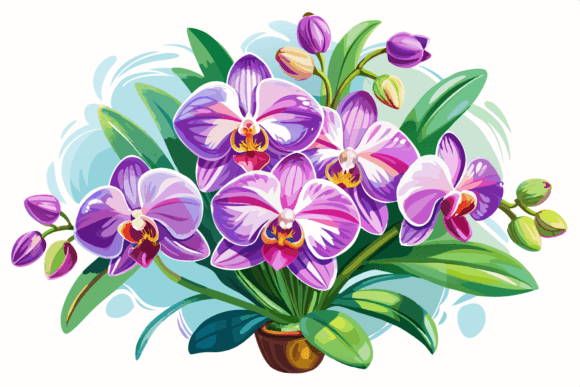
Watercolor Purple Orchid Flower Clipart
When I first opened the file for Watercolor Purple Orchid Flower Clipart, my initial reaction wasn't just about the colors; it was about the mood. As someone who has spent years turning digital pixels into tangible stitched treasures, I know that not every pretty image translates well to thread. This piece, falling under the category of Illustrations and Graphics, possesses a softness that suggests elegance without being overly fussy. The watercolor aesthetic is trendy right now, but in embroidery, trends can be tricky. A design that looks great on a screen often loses its magic when the needle starts moving. My goal here is to give you an honest look at how this specific design holds up when pulled from your computer and onto real fabric.
The First Stitch: Visual Personality and Mood
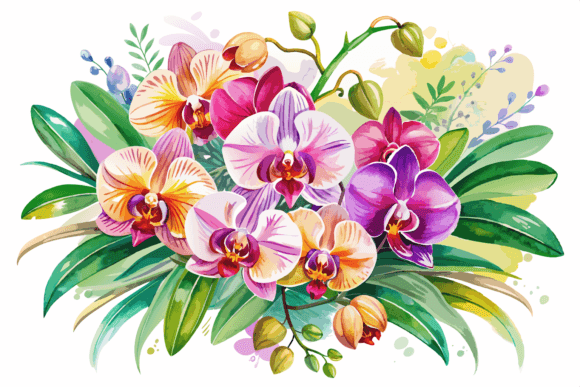
The moment you see the Watercolor Purple Orchid Flower Clipart, it feels romantic and delicate. The purple hues are deep enough to command attention but blended with lighter washes that mimic the organic flow of paint. For an embroidery project, this translates to a design that screams "handmade boutique." It isn't the rigid, geometric style of modern minimalism; it is fluid and expressive. This makes it naturally suited for projects where you want to evoke emotion—like a gift for a new mother or a personalized item for a wedding guest.
The layout is balanced, likely allowing for good negative space around the main flower head. In my experience, designs with too much clutter become muddy once stitched, especially if the stitch density is high. This orchid seems to have breathing room, which is a green light for a clean finish. However, the watercolor effect relies heavily on color gradients. Since we cannot stitch gradients directly, the success of this piece will depend entirely on how the digitizer interpreted those soft edges. If they used a mix of satin stitches and fill stitches to create the illusion of depth, it could be stunning. If they simply outlined the shapes, it might look flat against a textured background.
Real-World Application: From Screen to Tote Bag
Let's imagine a real scenario. You are preparing for a busy season and need to create a line of custom tote bags for a local artisan market. You decide to use the Watercolor Purple Orchid Flower Clipart as the centerpiece for these bags. You choose a heavy-duty canvas tote because you want durability. When you place the design on the chest area, the purple tones pop beautifully against the neutral canvas. The watercolor style softens the harshness of the thick canvas weave, making the product feel more approachable and less utilitarian.
Now, consider a different angle: baby items. Imagine stitching this same design onto a muslin swaddle or a onesie. The gentle curves of the orchid would feel perfect for a nursery theme. The softness of the watercolor style pairs exceptionally well with the delicate nature of baby clothes. It avoids looking too "sporty" or "graphic," which keeps the focus on the sentimentality of the gift. If you were selling these on Etsy, the visual appeal of this design would likely drive clicks because it looks like something a customer would actually want to receive as a personalized gift.
I also see potential for kitchen towels. A set of tea towels featuring this Watercolor Purple Orchid Flower Clipart would add a touch of class to a farmhouse-style kitchen. The purple acts as a sophisticated accent color that works with both white and cream backgrounds. It elevates a standard craft fair product into something that feels like a premium boutique item.
Where Caution is Required
While the design is beautiful, there are specific situations where you need to be careful. The first major consideration is the hoop size. If the original artwork contains very fine details or tiny text elements, shrinking it down to fit a small 4x4 hoop could result in a messy mess. Watercolor styles often rely on subtle transitions that can get lost if the stitch density is too high for the available space. Always check the recommended dimensions before committing to a small project like a cap or a small patch.
Fabric choice is equally critical. This design might struggle on stretchy fabrics like jersey t-shirts unless you use a strong stabilizer and perhaps a backing material to prevent puckering. The flowing lines of the watercolor style can distort easily if the fabric shifts during stitching. Similarly, on dark fabrics, the lighter watercolor washes might not show up clearly unless you use a high-density underlay or a specific thread palette. If you plan to use this for commercial embroidery on dark garments, test the contrast carefully.
Another pitfall is textured fabrics. While a canvas tote is great, a rough burlap sack might hide the nuances of the design. The embroidery file needs a relatively smooth surface to let the threads lay flat and show the intended color blending. If you are working on a curved surface like a baseball cap, remember that the center of the curve can sometimes stretch the design, making the petals look wider than intended. Always do a test run on scrap fabric first to ensure the proportions hold up.
Impact on Brand and Product Value
Using a high-quality graphic like this can significantly boost the perceived value of your finished product. Customers today are savvy; they can tell the difference between a generic clip-art application and a thoughtfully executed design. The Watercolor Purple Orchid Flower Clipart adds a layer of artistic integrity to your work. It signals that you care about aesthetics and detail, which builds trust with your buyers.
For an Etsy seller or a small shop owner, this design is a versatile asset. It fits seamlessly into themes of wellness, spring, gardens, and feminine branding. It allows you to maintain brand consistency across different products, whether you are creating custom apparel, embroidered patches, or digital mockups. When a customer sees a cohesive collection of items featuring this elegant orchid, they are more likely to view your shop as professional and reliable.
However, remember that the design itself is only half the battle. The execution matters. If the satin stitch edges are jagged or the fill stitch coverage is uneven, even the best design will fail. Ensure that the thread colors chosen complement the purple tones. Using variegated threads that shift from deep violet to lavender can enhance the watercolor effect, mimicking the original digital artwork.
Practical Designer Notes for Success
- Test Before You Sell: Never skip the scrap fabric test. It saves money and reputation. Check how the running stitch areas hold up after washing.
- Check File Details: Verify the machine embroidery design specifications. If the article doesn't explicitly state the stitch count or file formats (like .pes, .dst, .exp), contact the creator to confirm compatibility with your machine.
- Licensing Matters: If you plan to sell finished products featuring the Watercolor Purple Orchid Flower Clipart, double-check the license terms. Some graphics allow personal use only, while others permit commercial sales of embroidered goods.
- Stabilizer Selection: Use the correct stabilizer for your fabric type. Tear-away for wovens, cut-away for knits, and maybe even adhesive stabilizer for tricky surfaces.
- Color Contrast: Review the design in black and white to ensure the shapes remain distinct without relying solely on color.
In conclusion, the Watercolor Purple Orchid Flower Clipart is a strong contender for anyone looking to add a touch of floral elegance to their embroidery portfolio. It bridges the gap between digital art and textile art beautifully, provided you respect the technical limitations of the medium. Whether you are crafting a one-off gift or building a full product line, this design offers the versatility and charm needed to stand out in a crowded marketplace.